When I first started out as a cafeteria equipment supplier five years ago, I’d often get calls from small cafeteria owners panicking because they’d either bought too much gear that cluttered their 800-square-foot space, or they’d missed a critical piece that left them pulling double shifts during lunch rushes. Most small cafeterias—think the ones tucked into community college campuses, local manufacturing plants, or downtown office blocks with 200 to 500 daily guests—don’t have the budget or floor space for a full commercial kitchen’s worth of equipment. After working with 127 small cafeteria owners across three states (and fixing as many misaligned equipment purchases), I’ve learned that the best setups balance functionality, footprint, and long-term cost savings. Below are the non-negotiable pieces no small cafeteria should do without, plus a couple of “nice-to-haves” that make life way easier without breaking the bank. Cafeteria Equipment
Let’s start with the backbone of every food service operation, because without it, nothing gets cooked or stored correctly: commercial-grade refrigeration and freezer units. Wait, before you roll your eyes and think, “Fridges are fridges,” let’s talk about the small-cafeteria-specific twist here. Most small owners try to skip the extra-cost reach-in models that fit exactly their needs, but I’ve seen so many make the mistake of picking up a regular home-style fridge that can’t hold more than 20 cases of produce, or a used restaurant fridge that’s leaking energy and costing them hundreds a month in utility bills. For a small cafeteria, you don’t need a 10-door reach-in unit that takes up half your prep space. What you do need is a dual-section under-counter reach-in fridge and a compact upright freezer, both ENERGY STAR certified. The under-counter fridge is perfect for keeping prep ingredients, dressings, and pre-washed salads within arm’s reach while line cooking—no more running back and forth to a distant prep room mid-rush. The upright freezer, tucked against a wall or in a corner, holds bulk stock like frozen veggies, ground meat, and bakery items. I recently worked with a cafeteria at a small aerospace plant that cut their energy bill by $180 a month when they swapped their old 20-year-old upright freezer for a compact ENERGY STAR model. The key here is to measure your available space first, then choose units that leave 6 to 12 inches of clearance around the sides and back for ventilation—skimping on clearance leads to overheating and early breakdowns, which is way more expensive than buying the right size to begin with. A quick tip: for cafeterias that offer grab-and-go meals, add a small display reach-in fridge near the register—customers love seeing what’s available, and it keeps pre-made sandwiches and wraps at the safe 40°F or below temperature the entire time they’re in the line of sight.
Next up: a commercial prep table with integral sinks, and I can’t stress the “integral sinks” part enough. Most small cafeteria owners have a tight prep area, usually a 6 by 8-foot nook off the main line, and adding separate sinks for washing produce, handwashing, and cleaning tools eats up space and time. An integral prep table has built-in, code-compliant sinks right into the tabletop, so you can prep greens, chop veggies, and wash your hands without walking 20 feet to a separate sink station. The table itself doesn’t have to be stainless steel with a custom industrial finish (though that’s durable), but it does need to be 16-gauge stainless steel—thinner gauge will warp within a year from heavy chopping and hot pan spills. I had a owner of a community college cafeteria last year who tried to save $300 on a 20-gauge prep table, and within six months, it had a sag in the middle that made chopping uneven and made it hard to move heavy pots across the surface. A good prep table is also adjustable—many small spaces have uneven floors, so adjustable legs let you level the table without propping it up on cinder blocks (a fire hazard and a health code violation, by the way). For the small cafeteria, a 48-inch long prep table is perfect—long enough to hold all your prep tools, ingredient bins, and a cutting board, but short enough that it doesn’t block walkways.
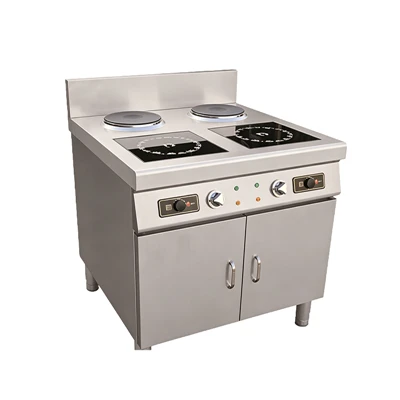
Now for the cooking equipment, which is where I see the most bad purchases from small cafeteria owners. You don’t need a 6-burner range with a griddle and a salamander oven—most small cafeterias offer 10 to 15 menu items a day, not 50. The essential piece here is a 2-burner commercial range with an oven base. Wait, why two burners? Because one is for simmering soups, sauces, and sides, and the other is for frying items like chicken tenders or hash browns—no switching between pots mid-rush. The oven base is non-negotiable because you’ll need it for baking paninis, heating up bulk lasagna or casseroles, or keeping hot sides warm before service. A lot of owners ask me if they can use a portable electric range, and while it’s tempting for small spaces, commercial ranges (even smaller ones) are designed to handle heavy, high-volume use. Residential ranges have components that burn out within two years of daily 8-hour shifts, whereas a commercial 2-burner range will last 10 to 15 years with basic maintenance like annual burner cleaning. I also always suggest adding a countertop griddle, only if you have the counter space. A 24-inch countertop griddle is perfect for flipping burgers, making grilled cheese, or heating up wraps, and it’s way cheaper than installing a built-in griddle. The biggest mistake here is buying a griddle that’s too big—if you can only fit a 24-inch model on your line, don’t force a 36-inch one just because it looks more “professional.” You’ll end up with cold spots on the griddle that make food taste uneven, and you’ll waste half the heat from the unused part of the surface.
Then there’s the workhorse of every small cafeteria: the commercial dishwasher. Most small owners think they can get away with a under-the-counter residential dishwasher, but here’s the thing: residential dishwashers take 45 minutes to a full cycle, and during a lunch rush where you’re going through 300 plates, bowls, and utensils, that’s just not fast enough. You need a compact door-type commercial dishwasher, also called a “rack dishwasher,” that can handle a full rack of dishes in 2 to 3 minutes. These units are built to last, they use less water than running a residential dishwasher three times, and they meet health codes, which is critical for passing your annual health inspection. I recently helped a downtown office cafeteria switch from an under-the-counter model to a compact rack dishwasher, and their dishwashing staff went from working 2 hours after lunch to 30 minutes. They also saved $120 a month on water and electricity because the commercial model uses heat to dry dishes, so you don’t need to run a separate hand-drying station that wastes paper towels. Another pro tip: make sure the dishwasher has a built-in sanitizing cycle that reaches at least 180°F—this is non-negotiable for food safety, and skimping on this will lead to failing health inspections, which can cost more than the dishwasher itself in fines.
Now, let’s talk about two often-overlooked pieces that are essential for keeping things running smoothly: food warmers and a compact ice machine. Wait, food warmers aren’t the big buffet-style ones you see at hotel breakfasts—for small cafeterias, you need countertop food warmers, also called “hot food wells.” These are small, countertop units that hold 2 to 4 full-size hotel pans, perfect for keeping soups, mashed potatoes, or pasta warm during service. They’re way more space-efficient than a full steam table, and they let you cook food in bulk ahead of time, which cuts down on last-minute cooking during rushes. I always recommend getting at least two countertop warmers—one for hot sides and one for entrees—so you don’t have to move pans around when you restock. The ice machine is another must-have, even if you think you can use ice from the grocery store. A compact under-counter ice machine produces 100 to 150 pounds of ice a day, which is exactly what a small cafeteria needs for drinks, salad toppings, and cold sides. Buying ice from a supplier costs about $2 per 10 pounds, whereas a compact ice machine costs you about $15 a month in electricity to produce the same amount. Most owners pay for the ice machine within 6 to 8 months of installing it, so it’s a smart investment, not a luxury.
Now, a couple of bonus pieces that I suggest to every small cafeteria owner, even if they’re on a tight budget. First, a commercial microwave that’s at least 1000 watts. A lot of small cafeterias use microwaves to reheat pre-made items, and a 700-watt home microwave will take twice as long and use more energy than a 1000-watt commercial microwave. Second, a set of durable, stainless steel food storage bins with airtight lids. These don’t sound like equipment, but they’re critical for keeping ingredients fresh, reducing food waste, and organizing your prep station. I’ve seen owners use old plastic bins that crack and leak, leading to spoiled food and pest problems—stainless steel bins are easy to clean, last forever, and meet food safety standards.
Wait, let’s circle back to the big mistake I see most small cafeteria owners make: overbuying. I had a client last year who ran a small cafeteria at a K-12 school, and she bought a 6-burner range, a full-size walk-in freezer, and a 10-door reach-in fridge because the salesman talked her into it. Six months later, she was paying $400 a month in utility bills for gear she barely used, and she had no space left for a proper prep station. When I helped her rework her setup, we swapped the 6-burner range for a 2-burner model, moved the walk-in freezer to a storage closet and replaced it with a compact upright freezer, and she cut her utility bills by $280 a month, with more space to cook and serve food during rushes. The key to choosing equipment for a small cafeteria is to match every piece to your daily volume, your menu, and your available space, not what looks good in a catalog.
If you’re a small cafeteria owner reading this, chances are you’re juggling tight budgets, strict health codes, and long hours, and choosing the right equipment can feel overwhelming. That’s why I’ve spent the last five years building my business to support small food service operations, not just big chains. Whether you’re opening a new cafeteria, upgrading an old setup, or trying to cut down on operational costs, the goal is to have a workspace that works for you, not against you.
If you’re ready to talk through what equipment fits your specific space, menu, and budget, feel free to reach out for a no-obligation consultation. We’ll walk through your floor plan, your daily guest count, and the types of food you serve to put together a setup that’s durable, efficient, and won’t leave you stuck with unused gear that takes up space and costs you money.
Stainless Steel Kitchen Equipment References:
- National Restaurant Association. (2022). “Essential Commercial Kitchen Equipment for Small Operations.” Restaurant Industry Insights Report.
- U.S. Food and Drug Administration. (2021). Food Code: Commercial Food Service Equipment Requirements for Small Cafeterias.
- U.S. Environmental Protection Agency. (2023). ENERGY STAR Guidelines for Commercial Refrigeration and Cooking Equipment.
- Small Business Administration. (2022). Cost-Saving Equipment Tips for Small Food Service Businesses.
Zhejiang Anneng Kitchen Equipment Co., Ltd.
As one of the most experienced cafeteria equipment manufacturers and suppliers in China, we also accept customized order. With abundant experience, we warmly welcome you to wholesale advanced cafeteria equipment in stock from our factory. For quotation, contact us now.
Address: No. 1003 Donghai Avenue, Taizhou Bay New Area, Taizhou City, Zhejiang Province
E-mail: 13968527240@163.com
WebSite: https://www.annengkitchen.com/
