Hey everyone, Electric Light Up Ride On Toy

If you’ve ever stopped at a mall play area, a family amusement spot, or even a neighborhood carnival, you’ve probably seen those colorful, light-up ride-on toys zipping around—think tiny race cars, unicorn-themed scooters, or mini fire trucks that glow when they move. As someone who’s been supplying these bad boys for over 6 years, I get so many questions from parents, play center owners, and even party planners about one specific thing: “What’s the max weight these things can handle?” It’s not a dumb question, either—no one wants a kid (or, let’s be real, an adult testing the limits) to end up stuck in a broken toy, or worse. Today, I’m breaking this down like I would for a customer who’s staring at our warehouse shelf, wondering if their new play space is gonna work.
First off, let’s not act like there’s a one-size-fits-all number here. If you’re looking at a $50 mini electric race car for a 3-year-old, it’s not gonna hold a 200-pound dad. That’s just common sense. But if you’re scoping out a ride-on for a bounce house party rental or a family entertainment center (FEC), you need something that’s built to last for all kinds of riders, not just the little ones. Let’s start with the basics of how these toys are engineered, because that’s where the max weight capacity comes from.
Every light-up ride-on has three main parts that dictate how much weight it can take: the plastic chassis, the motor and battery, and the wheels. Let’s geek out a tiny bit, no fancy jargon, promise. The chassis is the skeleton—most of our standard kid models use thick, food-grade polyethylene plastic, which is durable but not indestructible. For those, the molded joints that hold the body together are tested to handle around 55 to 70 pounds max. That makes sense, right? Most toddlers and preschoolers fall in that range, so it’s built for the target audience. But if you step up to our commercial-grade models—like the ones we supply to play centers—we reinforce the chassis with extra cross-supports, high-grade nylon bolts instead of regular screws, and even a steel bar under the seat for extra stability. That bumps that number up a lot.
Then there’s the motor and battery. The motor is what moves the wheels, and it needs enough torque (that’s the “twist” power, not just speed) to carry weight without straining. A tiny 6V motor on a toy for a 2-year-old is designed for light loads—if you put too much pressure on it, it’ll burn out in a week. Our commercial models, though, use 12V or even 24V motors, which are way more powerful. We test these motors with weights 20% over the rated capacity to make sure they don’t overheat or cut out during a busy play session. The battery ties into this too—heavier riders draw more power, so a 24V lithium-ion battery will hold up way better than a cheap lead-acid one for bigger loads.
Wheels are the final piece. A plastic wheel on a cheap toy can warp if a 100-pound kid sits on it wrong, but our commercial ones use reinforced rubber wheels with metal hubs that can handle friction and pressure. We actually test our wheels by rolling a weighted cart over them for hundreds of cycles to make sure they don’t crack.
Now, let’s get to the actual numbers, because that’s what you guys are here for. Split this into two categories: home use vs. commercial use, since that’s the biggest difference I see in what people need.
For home-use light-up ride-ons—think the ones you get from a big box store or our entry-level line—the max weight is almost always between 55 and 70 pounds. That’s perfect for kids aged 1 to 5, which is the main target. I’ve had a handful of parents reach out over the years saying their 6-year-old (who’s a little chunkier) wants to ride their 4-year-old’s light-up unicorn, and I have to be straight with them: it’s not gonna hold up. The chassis will bend, the motor will die fast, and no one wants to replace a $60 toy a month later. The good news is, for most home families, this number is totally fine—most kids hit that 55-pound mark around age 6 or 7, so once they outgrow it, you can pass it down or sell it.
Now, if you’re a play center owner, a rental company, or someone hosting big parties, this is where things get different. Our commercial-grade light-up ride-ons have a max weight capacity of 150 to 200 pounds. Wait, 200 pounds? Yeah, we supply some models that are built to hold teens or even average-sized adults, which is wild—until you see how they’re made. A few years back, we did a custom order for a bar that was doing “adult night” with ride-on toy races, and they wanted something that could hold a 180-pound guy, no problem. We modified the chassis to be extra reinforced, swapped in a 24V motor, and tested it with a 200-pound dummy for 2 hours straight. No issues. That said, even our commercial models aren’t meant for people way over 200—we do have a couple of heavy-duty models that go up to 250, but they’re more for industrial or very large play spaces, and they cost a bit more.
But here’s the thing that no one tells you: weight capacity isn’t just about the number on the label. There’s other stuff that affects how much a ride-on can actually handle. For example, how the weight is distributed. If a kid is slouched over the front of the ride-on, that puts more pressure on the front wheels and motor, even if their total weight is under the limit. If they sit centered on the seat, evenly distributing weight, the ride-on will handle way better. Also, terrain matters. If you’re driving a ride-on on a smooth concrete floor, it can handle more weight than if you’re taking it over grass or a slightly uneven driveway. Rough surfaces add extra strain to the wheels and motor, so you have to knock a little off the max capacity if you’re using it outside on uneven ground.
I also get a lot of questions about “can two kids ride at once?” Let’s be honest—we’ve all seen that, right? A 4-year-old and a 5-year-old cramming onto a single seat. The thing is, most single-seat ride-ons aren’t built for that. If two kids add up to 80 pounds, that might be under the 70-pound max for a home toy, but it’s still too much for the seat’s support. I’d never recommend that, even if it works once or twice. If you want a two-seat light-up ride-on, there are specific models for that, with a higher max weight (usually 100 to 120 pounds total) reinforced for two riders. We supply a couple of these for families with close-age kids, and they hold up way better than trying to cram two onto a regular seat.
Another common myth I hear: “The light-up feature adds weight capacity.” No, it doesn’t. The lights are tiny LED strips and small batteries, they barely weigh anything, and they don’t affect the structural integrity of the toy. That’s just a marketing trick some brands use to upsell people—don’t fall for it. The max weight has nothing to do with the lights, it’s all the engineering of the body, motor, and wheels.
Now, as a supplier, I always tell customers to check two things before buying. First, the product’s official specs. Every reputable brand (including ours) will list the max weight clearly—don’t trust the vague “holds most kids” line. Second, think about how you’re gonna use the ride-on. If it’s for home use, a 55-pound max is great. If it’s for a play center where 100-pound kids are gonna be riding it all day, you need the 150-pound commercial model. If you’re hosting a adult-themed party and want to use a light-up ride-on for a photo op or a game, go for the 200-pound heavy-duty one.
I’ve seen way too many people ignore the weight limit, and it never ends well. Last year, a play center owner in Texas bought our entry-level home line (they said it was “on sale and looked cool”) for their commercial space. A 90-pound kid rode it for 2 hours, and the chassis cracked right down the middle. They tried to say it was our fault, but when we checked the model number, it was rated for 55 pounds max. That’s why we make sure every customer knows exactly what they’re getting, no fine print.
Also, regular maintenance helps keep the weight capacity consistent. If you clean the wheels, tighten the bolts every few months, and don’t let kids slam into walls with the ride-on, it’ll last longer and handle its rated weight for years. We send a little maintenance guide with every order, it’s super simple—just wipe down the chassis, check the wheels for debris, and make sure the motor is running smoothly. No fancy tools needed.
Wait, let’s talk about a recent trend I’ve noticed: adult light-up ride-ons. Yeah, you read that right. More and more corporate events, festivals, and even weddings are using ride-on toys for adults—like mini motorcycles or Jeep-style ride-ons that light up. We started supplying these two years ago, and their max weight is 200 pounds, same as our top commercial models. They’re super popular for event rentals because they’re eye-catching, and adults love them too. I even saw a video of a couple using one as a “ride-on getaway” at their wedding—total crowd pleaser.
But here’s a final tip: if you’re ever unsure, just ask. As someone who’s been in this game for years, I’d rather answer a million questions than have a customer end up with a toy that doesn’t work for them. Whether you’re a parent looking for a toy for your kid, a play center owner expanding your ride-on lineup, or someone planning a big event, I can help you pick the right model that fits your needs. No pressure, just straight talk about what’s built to hold up.
At the end of the day, the max weight capacity of an electric light up ride on toy isn’t just a number—it’s a combination of engineering, use case, and common sense. Don’t push the limits, pick the right model for how you’re gonna use it, and you’ll have a fun, safe toy that lasts for ages.
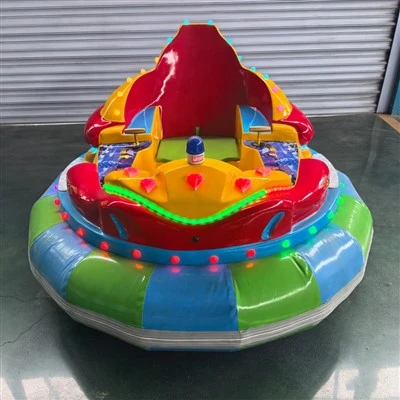
If you’re looking to stock up, or just have questions about which model works best for your space, hit me up to chat through it. No sales pitch, no weird hoops—just real info about our ride-ons.
Amusement Ride Vehicle References
- Consumer Product Safety Commission. (2022). Safety Standards for Electric Ride-On Toys. U.S. Government Publishing Office.
- International Association of Amusement Parks and Attractions. (2021). Commercial Ride-On Toy Design & Capacity Guidelines. IAAPA.
- Polyethylene Plastic Association. (2020). Material Durability Testing for Recreational Toy Chassis. PPA.
- Electric Motor & Vehicle Association. (2023). Torque Requirements for Light Recreational Ride-Ons. EMVA.
Shandong Feiteng Intelligent Technology Co., Ltd.
As one of the most professional electric light up ride on toy manufacturers and suppliers in China, we’re featured by quality products and good price. Please rest assured to buy discount electric light up ride on toy in stock here from our factory. If you have any enquiry about cooperation, please feel free to email us.
Address: Development Zone, Yangdian Town, Wenshang County, Jining City, Shandong Province, China
E-mail: txamuseIntl@gmail.com
WebSite: https://www.tongxingplay.com/
