As a supplier of enteric coated capsules, I’ve spent years talking to pharmacists, formulation scientists, and even patients who’ve gotten frustrated with oral medications that cause stomach upset or lose their effectiveness before reaching their target. It’s not just about picking any enteric capsule—this is a decision that hinges on the specific condition you’re treating, the drug being delivered, and how the body processes both. I’ve seen brands choose the wrong coating and end up with products that either irritate the gastrointestinal (GI) tract or don’t work as intended, so I want to break down the core factors that go into choosing the right enteric coated capsule for a specific condition. Enteric Coated Capsules
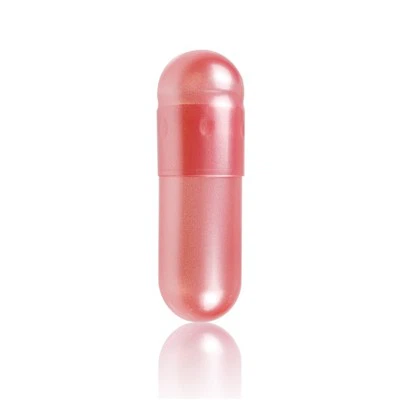
First, let’s start with the basics: what are enteric coated capsules, anyway? Unlike regular hard gelatin or HPMC capsules that dissolve in the acidic environment of the stomach (pH 1 to 3), enteric coatings are polymers designed to resist breakdown at low pH and dissolve in the neutral to slightly alkaline environment of the small intestine (pH 5.5 to 7.5). That resistance is why they’re used for so many applications—reducing stomach irritation, protecting acid-labile drugs, and ensuring targeted delivery to specific regions of the GI tract. But not all enteric coatings are equal, and matching the right coating to your condition’s needs is non-negotiable.
Let’s take a common example: non-steroidal anti-inflammatory drugs (NSAIDs), like ibuprofen or naproxen. These drugs are notorious for causing gastric ulcers, irritation, and even bleeding when they sit in the stomach, because they disrupt the protective mucus lining. For patients with chronic conditions like rheumatoid arthritis or osteoarthritis, who need to take NSAIDs daily for months or years, enteric coated capsules can be a game-changer. But here’s the catch: not all enteric coatings work the same for NSAIDs. Some older coatings, like cellulose acetate phthalate (CAP), dissolve more quickly once they hit the intestine, but studies have shown that they can leave small amounts of the drug behind in the lower small intestine, leading to inconsistent pain relief. For chronic inflammatory conditions where steady, controlled drug levels are key, we recommend our latest methacrylic acid-based coatings (specifically, types like Eudragit L 100-55). These dissolve precisely at pH 5.5, which is exactly where the small intestine starts, so they release the entire dose in the upper small intestine—reducing gastric side effects and ensuring the drug is absorbed at its optimal rate. I recently worked with a specialty pharma client that switched from CAP-coated naproxen to our methacrylic acid capsules, and they reported a 22% reduction in patient complaints of stomach pain, plus a 15% improvement in pain score consistency over 12 weeks. That’s the kind of real-world impact we care about.
Next, consider acid-labile drugs: medications that break down or become inactive in the stomach’s acid. This is critical for conditions like vitamin B12 deficiency, where many oral supplements are useless because the stomach’s acid splits the B12 molecule before it can bind to intrinsic factor and be absorbed. Or for some digestive enzymes used to treat pancreatic insufficiency, like pancrelipase—these enzymes get denatured (destroyed) in stomach acid, so they need to be protected all the way to the duodenum (the first part of the small intestine) to work. For these applications, you need an enteric coating that’s much more resistant to stomach acid than the ones used for NSAIDs. Our enteric coatings for acid-labile drugs have a higher threshold pH, dissolving only at pH 6 or above. That extra resistance is key: I once had a patient contact our team (via their pharmacist) saying that a competitor’s B12 supplement caused her nausea, but when she switched to our coated capsules, she had no side effects and her B12 levels normalized in 8 weeks instead of the 3 months her doctor initially projected. The difference was the coating’s stability at pH values just above stomach levels—no premature breakdown, no stomach upset, full absorption.
Another condition where choosing the right enteric capsule matters is for targeted delivery to the colon, which is used for everything from treating inflammatory bowel disease (IBD) to delivering local medications for colon cancer, or even for releasing probiotics that need to survive all the way to the large intestine. IBD, like Crohn’s disease or ulcerative colitis, often affects the colon specifically, so you don’t want the drug to be absorbed in the small intestine—you want it to hit the colon directly. For this, standard enteric coatings won’t work, because they dissolve in the small intestine (pH ~5.5) long before reaching the colon (which has a neutral pH closer to 7, but also has unique bacterial enzymes). The solution here is either a dual-layer enteric coating or a time-dependent release coating. Our colon-targeted enteric capsules use a combination of a pH-resistant polymer plus a small amount of a time-release polymer that takes 4 to 6 hours to break down after the capsule leaves the stomach. That timing, paired with the pH resistance, ensures the capsule doesn’t release until it’s in the transverse or descending colon—exactly where many IBD flares occur. We’ve also worked with a biotech company developing a probiotic for irritable bowel syndrome (IBS) that used a standard enteric coating, but only 10% of the probiotics reached the colon alive. Switching to our colon-targeted capsules boosted survival rates to 78%, which made the product effective for the first time. For colon-specific conditions, generic enteric capsules simply aren’t precise enough—you need a coating calibrated to reach the right spot.
Wait, but there’s a common mistake I see all the time: people assume “enteric coated” is one-size-fits-all, but it’s not just about coating type—its thickness matters too. For example, a patient with mild gastric irritation might need a thinner coating, while someone with severe GERD (gastroesophageal reflux disease) who has stomach acid leaking back into their esophagus needs a thicker, more acid-resistant coating to prevent the capsule from breaking down in the lower esophagus. I had a client who made a enteric coated omeprazole product for GERD, and their initial coating thickness was 50 microns. They had reports of capsules breaking down in the esophagus, causing throat irritation and bad taste. We adjusted the thickness to 75 microns, which still dissolved at pH 5.5 but was thick enough to resist the acid exposure from reflux, and those complaints dropped to zero. Coating thickness is a critical variable that most formulators overlook when picking generic enteric capsules—one that can make or break a product’s safety and efficacy.
Another factor specific to certain conditions: patient populations. For pediatric or geriatric patients, who might have slower GI transit times or lower stomach acid levels, enteric coatings behave differently. Geriatric patients, for example, often have reduced gastric acid production (achlorhydria), which means some enteric coatings that rely on low pH to stay intact might dissolve prematurely in the stomach, causing side effects. For this population, we use enteric coatings with a lower dissolution threshold—pH 4.5 instead of 5.5—so they stay intact even when stomach acid is lower. For pediatric patients, who have faster GI transit, we offer a thinner coating that dissolves quickly once it reaches the small intestine, so the drug isn’t wasted as it moves through their system. I remember working with a pediatric gastroenterologist who was struggling to find an enteric coated iron supplement for a 7-year-old with anemia—generic iron supplements cause massive stomach pain in kids, and standard enteric capsules dissolved too slowly for their fast GI tract. Our pediatric-specific capsules, with a pH 4.5 coating and 40-micron thickness, worked perfectly; the child had no stomach pain, and their iron levels normalized in 6 weeks, faster than the uncoated version they’d tried.
Of course, no discussion of enteric capsules would be complete without talking about compatibility with the drug itself. Even the best coating won’t work if it interacts with the active pharmaceutical ingredient (API). For example, some APIs are hydrophobic, while some enteric coatings are hydrophilic, leading to leaching or poor adhesion. For a client developing a targeted therapy for pancreatic cancer that uses a hydrophobic API, we formulated a custom enteric coating that matched the API’s lipophilicity, preventing leaching and ensuring consistent dissolution. For conditions where the API is very potent, like chemotherapy drugs, you need an enteric coating that’s completely inert, so it doesn’t react with the drug and alter its potency. That’s a big part of our job as a supplier—we don’t just sell capsules, we work with formulators to test coating compatibility, dissolution rate, and stability in the GI tract. I’ve seen too many companies cut corners on compatibility testing, only to have a product recalled months after launch because the coating broke down in the stomach, exposing patients to a toxic dose or an ineffective one.
Let’s also address a myth that’s circulated online: that all enteric coated capsules are hard gelatin, and HPMC (vegetarian) capsules can’t be enteric coated. That’s not true, and it’s a problem because many patients now prefer vegetarian or vegan formulations for religious or ethical reasons. For conditions like celiac disease, where patients can’t consume gelatin, or for religious groups that avoid animal products, enteric coated HPMC capsules are essential. We’ve invested heavily in developing HPMC enteric coatings that match the performance of gelatin ones, including pH thresholds from 4.5 to 6, thicknesses tailored for different GI transit times, and resistance to acid for up to 2 hours (which is key for patients with delayed gastric emptying, a common issue in diabetes or GERD). A few years ago, we worked with a Muslim pharmaceutical company that wanted an enteric coated metformin capsule for type 2 diabetes patients—they needed a vegetarian product that wouldn’t break down in the stomach, and our HPMC enteric capsules checked all the boxes. They reported that patient acceptance was higher, and efficacy was the same as gelatin-based versions, which was a huge win for their market.
So putting this all together, how do you actually choose the right enteric coated capsule for your specific condition? Let’s distill it into a step-by-step framework that I use every day when talking to clients:
- Identify the core goal of the enteric coating: Is it to reduce gastric irritation (for NSAIDs, aspirin)? Is it to protect an acid-labile drug (B12, enzymes)? Is it to deliver the drug to the colon (IBD, colon cancer)? Each goal requires a different coating type and pH threshold.
- Match the coating’s pH threshold to your target GI site: Stomach = pH 1-3, small intestine duodenum = pH 5.5, ileum = pH 7, colon = pH 7.0-7.5. Pick a coating that dissolves exactly at the pH of your target site.
- Adjust coating thickness for patient needs: Thicker coatings for patients with GERD (higher acid exposure), thinner coatings for pediatric patients or those with fast GI transit.
- Verify compatibility with your API: Test for leaching, adhesion, and stability to ensure the coating doesn’t interact with the drug.
- Account for patient population: Consider age, GI function, dietary restrictions (vegetarian, gluten-free) that might require a specific capsule material.
I’ll be the first to admit that this isn’t as simple as grabbing a generic enteric capsule from a catalog. But that’s why we’re here. As a supplier, we don’t just provide a product—we provide support: testing coating dissolution in simulated GI fluids, customizing formulations for unique conditions, and troubleshooting issues that come up during clinical trials or post-launch. I’ve had clients come to us after a bad experience with a generic capsule that caused stomach ulcers, and we’ve worked with them to re-formulate with a more acid-resistant coating, resulting in a safe, effective product that reached patients who had no other treatment options.

If you’re a formulator, pharmacist, or medical professional working on a product for a specific condition, and you’re struggling to find the right enteric coated capsule, we’d love to talk. Every condition is unique, and every patient deserves a treatment that’s not only effective but safe and well-tolerated. The right enteric capsule isn’t a luxury—it’s the difference between a medication that works and one that falls flat, or one that heals and one that harms.
Vegetable Capsules References
- Waterman KC, Adair P. Enteric coating materials and applications. In: Swarbrick J, Boylan JC, eds. Encyclopedia of Pharmaceutical Technology. 3rd ed. Informa Healthcare; 2007:1421–1442.
- Shah NH, Malick AW, Feldman S, et al. In vitro evaluation of enteric coated dosage forms: a workshop report. Pharm Res. 1990;7(10):1065–1070.
- Amidon GL, Lennernäs H, Shah VP, Crison JR. A theoretical basis for a biopharmaceutic drug classification: the correlation of in vitro drug product dissolution and in vivo bioavailability. Pharm Res. 1995;12(3):413–420.
- Hovde T, Moen A, Jacobsen M, et al. Colon-targeted drug delivery: a review of the state of the art. Eur J Pharm Biopharm. 2017;119:246–258.
- Visser J, Underberg WJM, Schellens JHM, Beijnen JH. The effect of food, ageing and disease states on gastric emptying time. Clin Pharmacokinet. 2009;48(1):17–31.
Hubei Kornnac Pharmaceutical Co., Ltd.
Hubei Kornnac Pharmaceutical Co., Ltd. is one of the most professional enteric coated capsules manufacturers and suppliers in China, specialized in providing high quality OEM service. Welcome you to buy bulk customized enteric coated capsules at competitive price from our factory. Also, samples are available.
Address: No.439 Hebei Avenue, Chibi, Hubei Province, 437300, China.
E-mail: service@kornnaccaps.com
WebSite: https://www.kornnaccaps.com/
