Hey there, fellow folks who’ve been chasing that perfect well pump setup! If you’re deep in the market for an energy saving stainless deep well pump, I’m guessing you’ve already got a million questions floating around your head. One I hear all the time from both new homeowners and folks who’ve dealt with bad pumps before is: “Does this thing need some weird, special electrical connection that’ll make me call an electrician at 2 a.m.?” Fair question—you don’t wanna drop a chunk of cash on a pump just to get stumped on wiring, right? As a guy who’s been selling these stainless deep well pumps for years, I’m here to break this down like I would to my next-door neighbor over a cold soda. No tech jargon, no fancy fluff, just straight answers. Energy Saving Stainless Deep Well Pump
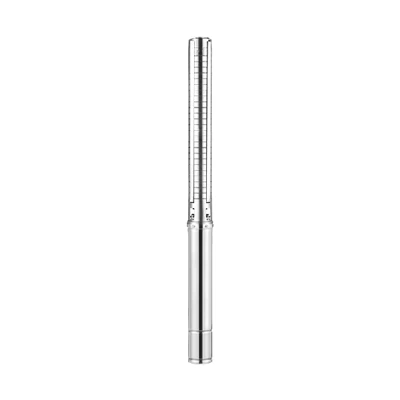
First off, let’s get one thing out of the way right now: most energy saving stainless deep well pumps don’t need some totally custom, one-of-a-kind electrical hookup. Like, 9 times out of 10, they work with standard home or small business wiring you probably already have in place. But wait—there’s always that 1 out of 10 where you gotta pay attention to the details, otherwise you’re gonna be dealing with a dead pump before even running it. Let’s start with what makes these energy saving stainless deep well pumps different from the old, clunky ones you might’ve had 10 years ago. Back in the day, well pumps were basic—just a motor spinning on a big impeller, no fancy tech. Now, the energy saving models we sell have got variable speed drives, right? That’s the thing that lets them adjust how fast they run based on how much water you’re actually using in your house. If you’re just filling a glass, they don’t blast 10 gallons a minute; they crank up when you’re running a shower and doing laundry at the same time. That’s how they save energy, by the way—no wasting power on over-pumping.
Now, those variable speed drives? They don’t exactly scream “plug-and-play,” but they also don’t require a whole new electrical panel. Here’s the key part: they do need a dedicated circuit, and that’s where a lot of people mix it up. Let me explain. A dedicated circuit is one that’s only for your well pump—no lights, no microwave, no TV sharing that same 15 or 20-amp line. Why? Because if something else kicks on and pulls power, your pump will strain, which kills that energy saving benefit and even shortens its life. Old fixed-speed pumps might’ve gotten away with sharing a circuit sometimes, but not these modern energy saving stainless deep well pumps. That’s not a “special connection” in the “you need a custom wire run from the power company” way—it’s just a standard dedicated circuit that any licensed electrician can set up in an afternoon. I’ve had customers try to skip this step once, and guess what? Their pump overheated in two weeks, and they had to pay twice to fix it: once for the wrong wiring, again for the new pump. Don’t be that guy.
Next up, voltage. Most residential energy saving stainless deep well pumps run on either 110V or 220V, which is exactly what your house already has. Wait, but—some larger commercial or agricultural models run on 480V? Yeah, but if you’re talking about a deep well pump for a regular home, that’s not gonna be the case. A lot of people get confused because they see “dual voltage” on the spec sheet. What that means is you can wire it for 110V or 220V, depending on your setup. But here’s the thing: you can’t just guess. You gotta check the pump’s label, and make sure your wiring can handle that voltage. If you’ve got an older home, say, pre-1980, you might wanna have an electrician test your existing lines to make sure they’re up to snuff. That’s not special, though—just a routine check, same as when you install a new air conditioner. I had a customer last spring who tried to wire his new pump for 220V but his old wiring was only rated for 110V. He called me panicking, and I told him to just swap the wiring to 110V—we sent over the simple guide—and he was good to go. No extra cost, no fancy parts.
Now, let’s talk about something I don’t see many people mention: ground fault protection. Wait, is that special? Kind of, but not in a way that’ll send you to the store for weird parts. Ground fault circuit interrupters (GFCIs) are standard for outdoor or wet areas, right? Well, your deep well pump is down in a well, which is super damp, so you need that extra layer of safety. A lot of these energy saving models come with built-in GFCI functionality, but sometimes you need a separate GFCI breaker or outlet. Here’s the kicker: don’t use a regular old circuit breaker for this. A standard breaker trips if there’s a short circuit, but a GFCI trips if there’s even a small leak of electricity—like if a wire gets wet, which is way more likely with a deep well pump. That’s a safety thing, not some special electrical requirement. I always tell my customers: better safe than sorry, and GFCI isn’t optional here. It’s just part of wiring a pump that’s in a wet environment.
Wait, what about the control box? Oh right, the control box is that little (or not-so-little) box mounted on the pump or at the surface that manages all that variable speed stuff. Some people think the control box needs a separate power source, but no—it’s powered by the same line as the pump motor. Again, it just needs that dedicated circuit we talked about earlier. I’ve had a few DIYers try to wire the control box themselves, and let’s be real—most of the time it works, but sometimes they mess up the polarity and the pump just hums and doesn’t run. No big deal, just flip two wires, but that’s why I recommend at least a consult with an electrician, even if you’re handy. You don’t wanna fry that $500 control box because you mixed up hot and neutral.
Let me hit on a common myth I hear all the time: “These energy saving stainless deep well pumps need a whole new electrical panel.” No way. Unless you’re running something else big at the same time—like a big swimming pool pump and a workshop—your existing panel can handle it. A typical 1.5 HP energy saving pump only pulls around 10 amps on 220V, which is nothing compared to your clothes dryer (that pulls 30 amps) or your electric stove. I’ve installed dozens of these in homes with 100-amp panels, and never had an issue. If you’ve got a smaller 60-amp panel, yeah, you might wanna check, but that’s a rare case. It’s not a “special connection” thing—it’s just matching your panel’s capacity to the pump’s draw.
Now, let’s get into when you might actually need something a little different. If you’re installing a deep well pump for a farm, a large commercial building, or a rental property with multiple units, you might be looking at a 3 HP or bigger pump. Those usually run on 220V or even 480V, and might need a dedicated circuit with thicker gauge wire. Wait, but is that special? It’s not unique to energy saving pumps—any big pump needs that. You wouldn’t run a 3 HP air compressor on 14-gauge wire, right? Same logic here. Thicker wire = less voltage drop = the pump runs efficiently, which is exactly what you want from an energy saving model. So it’s not a special requirement; it’s just following basic electrical rules for high-power equipment.
Another thing: if you’re adding a well pump to a property that didn’t have one before, that’s a little different than replacing an old pump. You might need to run a new wire from the panel to the well head, but that’s just standard wiring, not some custom setup. Let’s say your well is 50 feet from the house. Running 220V wire from your panel to the well is the same as running a wire for a new outdoor light. The only difference is it needs to be buried a little deeper, but that’s a local code thing, not a pump-specific requirement. I always tell new well owners: don’t let anyone tell you you need a special “well pump wire.” Just use UF (underground feeder) wire, which you can pick up at any hardware store. It’s cheap, it’s standard, and it works.
Wait, let’s talk about long-term savings here, because that’s why you bought an energy saving pump in the first place. If you skip the proper electrical hookup, you’re gonna lose that savings. If you don’t have a dedicated circuit, your pump works harder, uses more electricity, and doesn’t run as long. If you use the wrong wire, voltage drops, so the motor has to draw more amps to do the same work, which again wastes energy. I had a customer a few months back who wired his pump with 14-gauge wire when he should’ve used 12-gauge. His electric bill went up $40 a month, and he had no idea why. Once we got an electrician to rewire it, the bill went back down, and the pump ran quieter too. That’s the thing: doing the electrical right isn’t just about making the pump work—it’s about getting the energy saving benefits you paid for.
Now, let’s clear up one more myth: you don’t need any special tools to wire these pumps. A standard screwdriver, wire strippers, a multimeter (to test voltage, if you wanna be safe), and maybe a pair of pliers is all you need. If you’re comfortable working with electricity, you can totally do this yourself, but I highly recommend getting a licensed electrician to sign off on the work. Codes are different in every area, and you don’t wanna get stuck with a fine or a safety hazard because you skipped an inspection. The good news is, any electrician worth their salt has wired a dozen of these energy saving stainless deep well pumps before—they don’t throw their hands up and say “I don’t know how to hook that up.”
So, to wrap this up: do energy saving stainless deep well pumps require special electrical connections? The short answer is no, not really. They need standard electrical work that any qualified electrician can do, with a few key rules: dedicated circuit, correct voltage matching, proper wire gauge, ground fault protection. That’s it. No custom parts, no weird power lines from the utility company, no crazy setup. The only time you might run into something a little different is if you’re going for a very large pump for commercial or agricultural use, and even then, it’s just following standard rules for high-power equipment.

Look, I get it. Wiring a new pump can feel overwhelming, especially if you’ve never done it before. But that’s why my team is here. We’ve helped hundreds of homeowners and small business owners get their energy saving stainless deep well pumps set up right, without the stress. We don’t sell you a pump and ghost you—we answer questions, send guides, and if you need a referral to a good electrician in your area, we can hook you up too. At the end of the day, you bought an energy saving pump to save money on your bills and get reliable water—don’t let a bad electrical setup ruin that. If you’ve got more questions about wiring, or you’re ready to pick out the right energy saving stainless deep well pump for your well, hit us up. We’re here to help.
Smart Pump References
- International Association of Electrical Inspectors. (2021). Residential Well Pump Wiring Standards.
- U.S. Department of Energy. (2022). Energy Efficient Pump Systems: Installation and Electrical Requirements.
- National Electrical Code (NEC). (2023). Article 680: Swimming Pools, Fountains, and Similar Installations (applicable to well pump wet location wiring).
- Stainless Steel Pump Manufacturers Association. (2020). Deep Well Pump Electrical Compatibility Guide for Residential Applications.
Longbiao Pump Industry Co., Ltd.
We are one of the most professional energy saving stainless deep well pump manufacturers and suppliers in China, featured by quality products and low price. Please rest assured to buy discount energy saving stainless deep well pump for sale here from our factory. We also accept customized orders.
Address: Unit 101, Building 11, Pan’ao Entrepreneurship Park, Daxi Town, Wenling City, Taizhou City, Zhejiang Province, P.R. China
E-mail: 1653746797@qq.com
WebSite: https://www.cnlongbiao.com/
