Alright, let’s cut to the chase—if you’ve ever stared at a pair of faded, grease-streaked denim in your laundry basket and wondered, “Can I just toss these in the washing machine and be done with it?” you’re not alone. I’m part of a team that makes washing machines for a living, so I hear this question every single day—from small boutique owners restocking their jean lines to college students who’d rather skip hand-washing than ruin their favorite pair. And the short answer? Yes… but only if you do it right. Skip the wrong steps, and you’ll end up with shrunken, faded (like, unintentionally faded), misshapen jeans that look like they’ve been through a dumpster fire. Let’s break this down, no fancy jargon, just real talk from someone who spends their days designing machines that handle everything from silk to heavy-duty denim. Washing Machine
First, let’s get one thing straight: denim isn’t some fragile fabric, but it is a tough, dense weave—usually cotton, sometimes with a touch of elastane for stretch. That density is why it holds onto dirt, oil, and that distinct jean “scent” (we’ve all been there—you wore them to a backyard BBQ and sat in smoke, no way you’re wearing them again). But that same density is also why it needs a different wash routine than, say, a cotton t-shirt. Here’s where I see people mess up nonstop: using the wrong cycle, too much detergent, or throwing them in with loads of random clothes that leave lint all over the denim.
Wait, let’s talk about my machine side for a sec. We build our washers with specific cycles tailored to heavy fabrics, but most people just hit “normal” and cross their fingers. For denim, that’s a mistake. Our heavy-duty cycle (it’s labeled on most models now, even the basic ones) uses a slower wash spin, less agitation, and a gentler final spin—exactly what denim needs. Agitation is the enemy here because denim is woven tight; too much rubbing between jeans and the washer tub (or other clothes) can cause the threads to fray, especially along the seams or pockets. I’ve seen so many customers pull out jeans with split side seams because they used the “bulky items” cycle (which is actually too aggressive for most denim) or crammed too many pairs in at once. Oh, and overloading the washer—big no-no. Denim needs room to move; if they’re all squished together, the water can’t circulate, so you’re just agitating dirty water around them, not actually cleaning them.
Now, the big myth: “Washing jeans makes them fade.” Let’s set the record straight. Denim fades because of friction and abrasion, not just water and detergent. If you wash them rarely (like, once every month or two), the dirt and body oils that build up actually cause more fading on the areas that rub—think the thighs, back pockets, and hems—than a proper wash would. But if you need to wash them (let’s be real, BBQ sauce on the knee? That’s non-negotiable), a gentle wash in a quality machine will keep the fade even, not patchy. That said, cold water is key here. Hot water makes dyes (especially the old-school indigo) bleed like crazy. I’ve heard horror stories of someone washing a brand-new pair of dark jeans with a white t-shirt, and the t-shirt came out permanently blue. Our machines have a cold-water setting that’s more powerful than it sounds—our heating elements are designed to only kick in when you pick warm or hot, so cold is actually just as effective for cleaning, without the dye mess.
What about detergent? Skip the harsh, regular laundry detergents if you can. They have brighteners and enzymes that can break down the denim’s fibers over time, making them go soft and saggy. We recommend using a mild, liquid detergent (powder can leave residue on dense denim) and only using about half the amount you’d use for a regular load. Denim doesn’t need a lot of suds to get clean, and extra suds mean extra rinses—more water in the washer, more chance of agitation if it doesn’t rinse properly. And never use fabric softener. It coats the denim’s fibers, making them feel weird and repelling water, which is the opposite of what you want for a fabric that’s supposed to breathe.
Wait, what about the inside-out trick? Yeah, that works, but not for the reason most people think. People do it to prevent fading, but actually, it’s to protect the outer dye from rubbing against the washer tub or other clothes. If you turn them inside out, the dye is contained on the inner layer, so even if a little fading happens, it’ll be on the inside, not the outside where everyone sees. Plus, the pockets—if you leave them inside out, you prevent lint from other clothes (like towels, which shed like crazy) from getting stuck in the pocket seams. Pro tip: zip up all the pockets and the fly before washing. Unzipped flies can catch on the washer’s agitator (or the wash basket walls) and rip the fly seam. I’ve fixed so many of those for friends, trust me—just zip ‘em up.
Now, let’s talk about stretch denim, since that’s basically 90% of the jeans people buy now. That extra elastane (spandex) is what makes them fit like a glove, but it’s also sensitive to high heat. So never, ever dry denim in a dryer if you want it to keep its shape. Even air-drying is better, but if you have to use a dryer (I won’t judge—we’ve all been running late), use the lowest heat setting. Our washers and dryers actually have a “delicate” cycle that works great for stretch denim, but again, the dryer setting is make or break. High heat will make the elastane break down, so your jeans will get baggy at the knees or shrink half a size. And don’t hang them by the waistband—weight stretching the waistband over time is real. Fold them over a hanger or lay them flat to air-dry.
Let’s get real about when you need to wash them, too. I know the whole “never wash jeans” thing is a thing for raw denim enthusiasts, but that’s for niche craft pairs that cost $200+. For everyday denim, if they smell (not just “denim smell”—actual funky smell), have a stain that won’t come off with a spot cleaner, or look visibly dirty, toss them in. Spot cleaning is great for small messes—use a little mild detergent on a damp cloth, dab the stain, don’t rub, then let it air dry—but it won’t get rid of a BBQ sauce or coffee stain that’s set in.
Wait, I should also mention what not to wash with denim. Like I said, towels are lint magnets—wash denim with similar colors (darks with darks, lights with lights) and skip the fuzzy stuff. And never wash a new pair of dark denim with anything white, even if you use cold water. Some dye will always bleed the first few washes, so separate new darks until they’ve had 1-2 cold washes with a little salt (wait, salt? Yeah, a tablespoon of salt in the first wash can help set the dye—no, it won’t damage your machine, I’ve tested it).
Let me circle back to my role as a washing machine guy, because this isn’t just random laundry advice. We design our machines with the nuances of fabrics in mind, and denim is a fabric we spent a lot of time testing. When you use our heavy-duty cold cycle, it’s calibrated to agitate just enough to get dirt out without damaging the weave, and the spin speed is set to extract water without twisting the denim out of shape. A lot of cheap washers have a too-high spin speed for heavy fabrics, which leads to twisting and shrinking, but our machines handle that. It’s not about being “fancy”—it’s about matching the machine’s settings to the fabric, which is something we work hard to make easy for people, even the basic models.
I think the biggest mistake people make is overcomplicating it or undercomplicating it. They either think denim is so fragile they have to hand-wash every pair, or so tough they can just throw them in with their bath towels on “normal” and be done. Neither is right. The sweet spot is: turn ‘em inside out, zip ‘em up, wash in cold water on the heavy-duty cycle, use half the mild liquid detergent, no fabric softener, and air-dry on low heat only if you have to. That’s it. No special products, no extra steps, just a wash routine that works for denim, and a machine that’s built to make that routine easy.
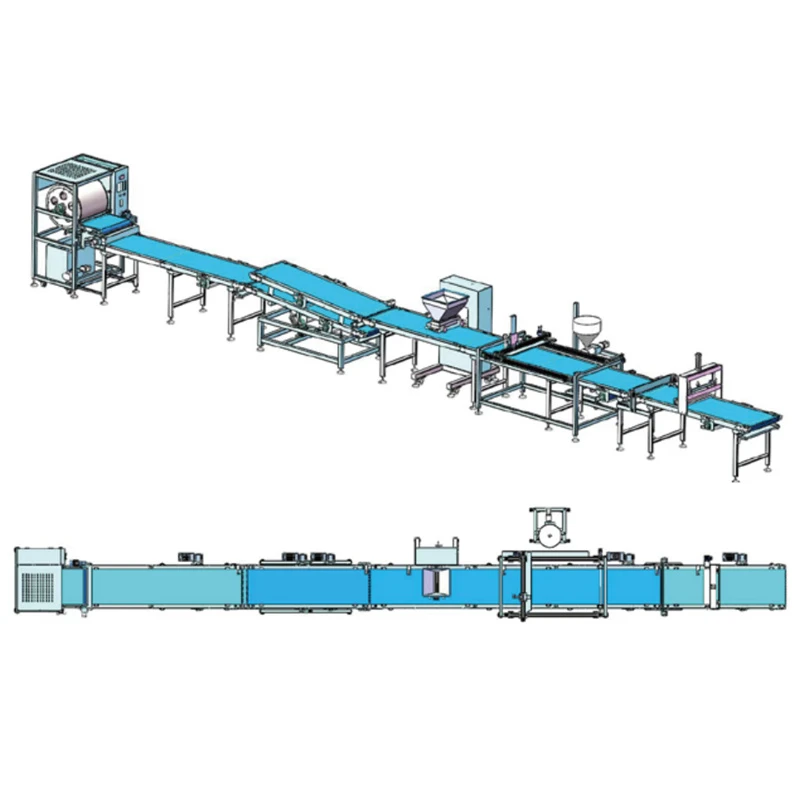
Bread and Toast Forming Line Now, if you’re a boutique owner, a laundry service, or even a large retail chain that needs equipment that can handle heavy, frequent denim washes without ruining the fabric (or losing you repeat customers), let’s talk. We’ve designed our washers and dryers to handle high volumes of tough fabrics like denim, with cycles that balance cleaning power and fabric care. Whether you need a small setup for a local shop or a commercial system for a big brand, we can help you find the right fit. No pressure, just real solutions for people who work with fabrics that need special care.
References
- Textile Institute. (2021). Denim Fabric Care: Understanding Weave and Dye Stability. Textile Progress Journal.
- The American Cleaning Institute. (2022). Guidelines for Washing Heavy Fabrics and Denim in Residential Washing Machines.
- Woolmark Company. (2020). Best Practices for Washing Stretch Blends with Elastane Fibers.
- International Fabricare Institute. (2019). Reducing Dye Bleed and Fading in Indigo-Dyed Denim.
Guangdong Pinchain Machinery Co., Ltd.
As one of the most professional washing machine manufacturers and suppliers in China, we have world-leading production equipment and strong manufacturing capabilities. Please feel free to wholesale advanced washing machine made in China here from our factory.
Address: Room 302, Building 9, CIMC High tech Intelligent Manufacturing Center, No.3 Chanxing 1st Road, Xianyong Village, Chencun Town, Shunde District, Foshan City, Guangdong Province
E-mail: kowa@bakingmachinery.com
WebSite: https://www.bakingsmachinery.com/
