If you’re running a plant that handles dry powders, granules, or semi-viscous mixes, odds are you’ve got a ribbon blender or paddle blender on your floor. As a blender supplier who’s spent 10 years troubleshooting these units for food, chemical, and pharma clients, I can tell you the #1 question I get isn’t about how to run them—it’s about what you need to do to keep them running, reliably, for years. Skip the “one-size-fits-all” maintenance checklists you’ll find on random industrial blogs—these two blenders are totally different under the hood, so their upkeep isn’t the same. Let me break it down straight, no fluff, and tell you what actually works, not what a textbook says. Ribbon Blender And Paddle Blender

First, let’s lock in the basics so we’re on the same page. Ribbon blenders are those U-shaped steel tanks with the twin helical (twisted, ribbon-like) shafts spinning inside, right? They lift and tumble materials from the bottom to the top, then fold them back in—super gentle, which is why they’re used for fragile stuff like protein powders or cereal mixes. Paddle blenders? Usually a horizontal or vertical tank with flat, angled paddles fixed to a central shaft. They push materials through the tank, shear them together a little more, so they’re better for heavier mixes like dry cement additives or resin pellets.
Now, maintenance for either—start with daily checks. This is non-negotiable. I’ve had a client call me at 2 a.m. because their ribbon blender’s drive belt blew, and they lost a 3-hour batch of specialty flour. That could’ve been avoided with a 2-minute pre-run check. For ribbon blenders specifically, daily: check the pressure gauge on the grease line (most have a centralized grease fitting) — if it’s higher than usual, that means the shafts are dragging on the tank lining, not spinning free. Also, crack open the end caps (the covers on both sides of the tank) and peek at the ribbon blades—if any small particles are stuck between the ribbon and the tank, that’s a sign of wear or misalignment, and it’ll mess up mix quality over time. For paddle blenders, daily checks are a little different since they have more moving parts on the central shaft. Tug each paddle lightly—if one wiggles more than others, that’s a loose bolt, and it’ll throw the whole shaft off balance, leading to vibration that’ll destroy bearings fast. Also, check the shaft seal every day—paddle blenders push material harder, so leaks here mean lost product and a mess to clean up.
Then, weekly deep cleans. This is where so many clients cut corners, especially if they run food or pharma, but even chemical clients skip it at their peril. For ribbon blenders, since the ribbons can trap material in the gaps between the helix turns, you need to take the end caps off once a week, get a stiff plastic scraper (metal will scratch the tank lining, which leads to particle buildup and wear), and dig out any caked-on material. Then, use a non-abrasive detergent—no wire brushes—wipe down the entire interior. For paddle blenders, the paddles are easier to access, but the gaps between the central shaft and the paddles (called the “keyways”) trap tiny bits of material that harden over time. I once had a pharma client who had to replace a $12,000 shaft because they didn’t clean those keyways for 6 months—hardened lactose had seeped in and stripped the keys. Pro tip: after cleaning, spritz the interior with a food-grade or industrial-grade anti-rust spray (depending on your product) — don’t use household WD-40, it can contaminate mixes if it drips into a batch.
Monthly maintenance is where you catch the big stuff before it becomes a disaster. Let’s start with ribbon blenders: the big wear parts here are the ribbon edges and the end seals. Once a month, turn the blender on empty, run it for 5 minutes, and listen for any scraping or grinding. If the ribbon is scraping the tank, it’s probably worn down by 1/8 inch or more—you can either grind it back or replace the ribbon edges (way cheaper than a whole new unit). Also, check the end bearings—jack up the tank a little (most have jack points) so you can spin the shafts by hand. If they feel gritty or make a noise like pebbles, that means the bearings need to be repacked with grease, not just topped off. For paddle blenders, monthly is all about the central shaft and drive train. Check the shaft’s runout—hold a dial indicator (if you don’t have one, a marker will work) against the shaft, spin it, and if the marker moves more than 1/16 inch, that means the shaft is bent, or the paddles are uneven, and you need to fix it fast. Also, check the chain or gear drive (many paddle blenders use chains instead of belts) — tighten the tension so it has about 1/2 inch of play, no more, no less. Too loose and it’ll jump off, too tight and it’ll snap the chain.
Quarterly and yearly checks are long-term, but they save you thousands in downtime. For ribbon blenders: quarterly, do a full alignment check. Misaligned shafts are the #1 cause of premature wear on ribbon blenders—if they’re even 1 degree off, one side of the ribbon will rub the tank nonstop. Use a laser alignment tool (or a straight edge and feeler gauge if you’re on a budget) to make sure both shafts are parallel. Yearly, if you run the blender 24/7, replace the end seals and do a full inspection of the tank lining. If it’s stainless steel, a little scratch is fine, but if it’s pitted, you’ll need to polish it or get it re-lined before it contaminates batches. For paddle blenders, quarterly, take off the top cover and inspect the paddle mountings—any loose welds? Even a tiny crack can turn into a paddle flying off during a run, which will destroy the tank. Also, check the motor’s amperage draw—if it’s higher than the specs listed on the motor, that means the shaft is dragging or there’s a load issue that needs fixing. Yearly, replace the drive belts (if you have belt-driven) or the chain, even if they look fine—rubber and metal stretch over time, so replacing them proactively is way cheaper than a belt breaking mid-batch.
Wait, I should mention something specific for niche use cases, because that’s where people mess up. If you’re running a ribbon blender for fragile food products (like protein powder), don’t over-grease the bearings—too much grease can drip onto the product, leading to contamination. If you’re running a paddle blender for heavy-duty construction mixes, you need to check the paddles for wear every 2 months, since abrasive sand will wear them down fast. I had a concrete additive client who went 4 months without checking their paddle edges and had to replace 8 paddles instead of re-gauging them for $50 each.
Another common mistake: using generic parts. I see clients buy cheap replacement ribbons or paddles off Amazon or industrial auction sites, and within 6 months they’re back with a broken unit. The parts we supply are precision-machined to fit exactly the tank specs of our blenders, so they don’t rub, don’t wear unevenly, and keep your mix consistent. Generic parts might be cheaper upfront, but they cost you more in downtime.
Now, let’s talk about the biggest maintenance myth I hear all the time: “If it’s working, don’t touch it.” No. I had a snack food client who ran their ribbon blender for 18 months without any checks, and when they finally opened the tank to clean it, they found a 2-inch crack in the bottom of the tank, caused by constant rubbing of the worn ribbon. They had to shut down for 2 weeks to replace it, costing them $150,000 in lost production. That’s the kind of mistake you avoid with consistent, simple maintenance.
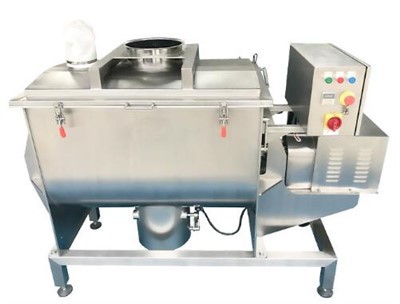
If you’re still winging your blender upkeep, or if you’re in the market for a new ribbon or paddle blender and want to make sure its maintenance is as straightforward as possible, hit me up. I don’t do pushy sales pitches—just honest advice based on 10 years of working with blenders every day. Whether you need a maintenance checklist tailored to your specific model, want to replace worn parts, or are shopping for a new unit that’s built to last, I can help you get set up so your blenders run smooth for years.
screw feeder and vacuum feeder References:
- Industrial Blender Maintenance Best Practices, National Association of Fabricated Process Equipment, 2021.
- "Guide to Horizontal Blender Upkeep", Journal of Food Process Engineering, Vol. 44, No. 8, 2020.
- Lubrication Standards for Industrial Mixing Equipment, American Society of Mechanical Engineers, 2019.
- Wear and Tear Mitigation for Powder Blenders, Chemical Processing Magazine, 2022.
Shanghai Dahe Packaging Machinery Co., Ltd.
Shanghai Dahe Packaging Machinery Co., Ltd. is one of the most professional ribbon blender and paddle blender manufacturers and suppliers in China, featured by quality products and competitive price. Please rest assured to buy high-grade ribbon blender and paddle blender for sale here from our factory.
Address: 1098#, Minta Road, Songjiang District, Shanghai, 201617, China.
E-mail: International@dahepack.com
WebSite: https://www.dahe-powderfillingmachines.com/
